Casinos That Accept E-Cheques in the UK
 Available in GB

A cashier listing is more direct evidence than a general payment page, and deposit availability does not establish withdrawal support.
Table of Contents
- Does an E-cheque Option Actually Appear in the Cashier?
- Deposits and Withdrawals: Check Both Directions
- Compare Payment Routes by the Cost That Matters to You
- What to Check Before You Make an E-cheque Deposit
- Payment Security and New-Casino Claims
- Deposit Options and Fast Payment Methods at Amonbet Casino UK
Does an E-cheque Option Actually Appear in the Cashier?
A casino’s payment page can mention a method without offering it to you at the point of deposit. For an e-cheque, the useful test is not whether the term appears somewhere on the site, but whether the cashier presents it as a selectable option for your account. Treat those as different claims.
Start with the casino’s own cashier rather than a search result, comparison table or old review. Sign in to the account you intend to use and open the deposit area. Look for an option named “e-cheque”, “eCheque” or a clearly identified equivalent. If you cannot find it among the displayed methods, a general page describing payment services does not establish that the option is currently available to you.
That distinction matters because payment information can be broad or out of date. A page might describe methods supported by a payment provider, list methods that the operator has offered in some market, or summarise an earlier version of a cashier. None of those establishes that an e-cheque can be selected in the UK account you are viewing now. The cashier is the more direct evidence.
When looking for UK casinos that accept e-cheque, payout timing is one detail worth checking. Use the stated payout speed for each operator as a reference point.
1. EvoSpin
Payout speed: 1-3 business days
EvoSpin lists a payout speed of 1–3 business days, giving you a stated timeframe to consider.
2. Chanze
Payout speed: 1-3 business days
Chanze lists a payout speed of 1–3 business days. You can use this as a reference when reviewing its payout timing.
3. Revery Play
Payout speed: 1-3 business days
Revery Play lists a payout speed of 1–3 business days, a useful timing detail for you to note.
4. WinBeast
Payout speed: 1-3 business days
WinBeast lists a payout speed of 1–3 business days. This gives you a stated timeframe for payouts.
5. NightWin
Payout speed: 1-3 business days
NightWin lists a payout speed of 1–3 business days, which you can factor into your review.
6. Dieselwin
Payout speed: 1-3 business days
Dieselwin lists a payout speed of 1–3 business days. You have a stated payout timeframe to consider.
7. Britsino
Payout speed: 1-3 business days
Britsino lists a payout speed of 1–3 business days, providing you with a clear timing detail.
8. Amunbet
Payout speed: 1-3 business days
Amunbet lists a payout speed of 1–3 business days. You can use that timeframe when considering the operator.
9. SpinFormula
Payout speed: 1-3 business days
SpinFormula lists a payout speed of 1–3 business days, a stated detail for you to keep in mind.
10. NightLuck
Payout speed: 1-3 business days
NightLuck lists a payout speed of 1–3 business days. This gives you a reference point for payout timing.
What counts as a visible option?
A usable cashier option should be identifiable as a payment choice, not merely as a word in explanatory text. Check whether the method appears as its own tile, row or labelled selection in the deposit flow. If it is buried in a paragraph, mentioned in a general FAQ, or shown only in an image that cannot be selected, you have not confirmed that the cashier offers it.
Follow the displayed choice far enough to see whether it opens a method-specific payment step. You do not need to submit a deposit to confirm that the option is present. Stop before authorising a payment or entering details if you are only checking availability. If selecting the label produces an error, an unavailable notice or a request to choose another method, record that as a failed route rather than as an available e-cheque option.
A payment method can be listed but not be available for every account or transaction. The visible cashier is the relevant place to check your own access. If the option appears only after you sign in, that is more meaningful for your account than a public page. If it does not appear, do not infer that it will become available after you add funds.
Keep the wording precise. “The site mentions e-cheques” means the term appears in its information. “The cashier shows an e-cheque deposit option” means you have seen it presented as a choice. Those statements are not interchangeable.
Entropay at UK Casinos: How to Check Availability · Casinos That Accept MuchBetter in the UK · Casinos that accept Interac in the UK: what to check · Casinos That Accept Ukash in the UK: What to Check
Check the context, not just the label
Read the text around the payment choice. The cashier may identify a provider or give a short description that helps distinguish an e-cheque from another bank-related route. Do not assume that a bank transfer, open banking payment or card transaction is an e-cheque just because all involve a bank account somewhere in the process. Similar-sounding routes can be separate products with different names and steps.
If the label is unclear, check the operator’s own payment information for an explanation, then compare it with the cashier. The information page can help you interpret a label; it cannot replace the live selection. Where the wording conflicts, avoid treating the more convenient description as proof. Ask support to clarify the exact method shown in the cashier and whether it is available to UK customers on your account.
Be wary of a result that uses “e-cheque” loosely as a broad label for electronic payments. A method should not be counted as an e-cheque simply because it is cashless or begins with a bank account. The description should make the route clear enough for you to recognise what you are selecting. If it does not, the honest status is “unclear”, not “accepted”.
Public information is a lead, not confirmation
A review, payment guide or operator page can help you decide where to look, but it may not reflect the current cashier. Payment menus can change, and a list may cover more than one country or account type. Even an accurate statement about a method at one point does not prove that the same choice remains available now.
Do
- Use the casino’s own cashier for direct evidence
- Sign in to your account to check availability
- Verify if the option opens a payment step
Don’t
- Rely on search results or comparison tables
- Assume a general payment page confirms access
- Treat mentions in FAQs as selectable options
Use outside information as a prompt for a direct check. Search the casino’s own help pages for its payment information, then sign in and inspect the deposit choices. If a third-party page says that an e-cheque is accepted but the cashier does not show one, do not rely on the third-party claim. If the cashier shows a method but the public payment page says nothing about it, seek clarification before proceeding.
The same standard applies to lists headed “best” or “top”. A ranking may use broad descriptions, may not have checked each cashier recently, or may refer to a different market. A favourable position in a list is not evidence that an e-cheque option appears in your account. The meaningful comparison begins only after you have established that the relevant payment choice is actually displayed.
A specialist review may list Visa and Mastercard among a casino’s payment methods, but that does not settle whether a card product is currently available to a UK customer. Check the cashier for the specific option and product eligibility. The same principle applies to e-cheques: a general payment list is a useful pointer, not a live confirmation.
Check your own account view
The account you are signed into is the most useful view because a cashier may present choices according to the account and market details it has. Do not assume that a screenshot, a friend’s account or a public page will match your display. If you are comparing information, note whether it comes from the operator or from a third party, and whether it is describing the UK service.
Casinos That Accept Bank Cheques in the UK · Casinos That Accept Neteller in the UK: What to Check · Casinos That Accept Neosurf in the UK: Payment Rules · Casinos that accept Dogecoin in the UK: deposits
If the cashier does not show the option, consider whether you are looking at the deposit area rather than a general account page. Reopen the payment menu and check the available labels carefully. If it remains absent, contact the operator through its official support channel. Ask a narrow question: whether an e-cheque deposit option is currently available to UK customers using your account. A direct answer is more useful than a generic statement that the casino supports online payments.
Do not mistake a support reply about a payment provider for confirmation that the cashier offers the route. Ask which exact label you should expect to see. If the reply describes a different method, such as a bank transfer, that does not confirm an e-cheque option. If support cannot identify the option or explain why it is absent, treat availability as unconfirmed.
Mobile and desktop views
A mobile cashier may arrange payment choices differently from a desktop page. That can make a method easy to overlook, but it does not make a hidden or absent option available. Open the deposit menu fully, check any labelled categories and read the names shown on the selectable choices. Avoid relying on a cropped image or an old mobile screenshot.
Mobile cashiers may arrange payment choices differently than desktop pages, but a hidden or absent option remains unavailable regardless of the device used.
If you can access both views, compare them while signed into the same account. A difference is a reason to ask support which display is current, not a reason to assume that one version will work after you start a payment. Do not proceed merely because a method appears in a promotional graphic or in a browser preview.
For a mobile e-cheque search, apply the same test as on desktop: is the exact method visible and selectable in the cashier on your account? A page that loads well on a phone is not evidence that it offers e-cheques. Device compatibility and payment-method availability are separate questions.
Keep the record simple
When checking, note the casino, the date you viewed the cashier, the exact label displayed and whether selecting it opened a relevant payment step. If there is no option, record that too. This small record helps you separate what you observed from what a page or another person claimed.
You can use a simple table:
| What you checked | What it establishes |
|---|---|
| A search result or review mentions e-cheques | The term appears in that information |
| The operator’s payment page describes e-cheques | The operator describes the method somewhere |
| The signed-in cashier displays a selectable e-cheque option | The option is presented in your account’s deposit flow |
| Support confirms a different bank method | That other method is described, not an e-cheque |
The table is deliberately strict. A method mentioned on a page may still be absent from the cashier. A selectable option is stronger evidence, but it is not a reason to skip the details shown before you authorise a transaction.
Confirm the UK service
For a casino serving customers in Great Britain, check that the operator holds the relevant UK Gambling Commission operating licence. You can verify the licence number on the Commission’s public register before depositing. This confirms the regulatory status of the operator; it does not prove that a particular payment method is available. Keep the two checks separate.
Payment pages may also discuss several currencies or markets. A specialist review may state that GBP is supported, but confirm the account currency before making a transaction so that you know whether conversion could apply. Currency information does not establish that e-cheques are offered, and an e-cheque label does not establish that your account is set to GBP.
Use the same standard for every claim: current, account-specific cashier evidence is stronger than a broad description. If the exact e-cheque choice is not visible and the operator cannot identify it clearly, do not count that casino as confirmed for e-cheque deposits. A result that sounds confident is still only a result. The cashier is the test.
Deposits and Withdrawals: Check Both Directions
An e-cheque appearing in a deposit menu does not establish that it can also receive a withdrawal. The two actions are separate functions, and a payment route that accepts money from you may not be available when the casino sends money back. Before treating any e-cheque casino site in the UK as suitable, check the cashier’s withdrawal options as well as its deposit options.
An e-cheque appearing in a deposit menu does not establish that it can also receive a withdrawal, as these are separate functions.
That distinction matters because the cashier may display different methods, conditions or limits depending on whether you are paying in or requesting a payout. The name of a method on a general payments page is not enough to show that it is currently offered for both directions on your account. Look for the route in the logged-in cashier, and read the terms attached to each transaction type.
Deposit availability is only half the check
Start with the deposit screen. If e-cheque is offered there, confirm the label and any instructions shown before you submit a payment. Then check the withdrawal screen separately. Do not assume that selecting e-cheque for a deposit creates an e-cheque payout route, or that a deposit being accepted means the casino can return funds by the same means.
The practical test is straightforward:
- Is e-cheque listed as a deposit option for your account?
- Is it also listed as a withdrawal option?
- If it is not listed for withdrawals, does the casino explain how the payout will be handled?
- Do the payment terms say that withdrawals must go back through the original route, or describe another process?
Treat unclear wording as unresolved, not as confirmation. A button labelled “deposit” confirms only the deposit function. A general statement that a casino supports a payment method may not tell you whether that support covers withdrawals.
This is particularly important when comparing casinos that accept e-cheque deposits in the UK. A site can appear to match your needs at the point of payment but leave you with a different payout route later. If you want one method for both directions, verify that exact arrangement before depositing. If you are willing to use another payout route, find out what it is and what the operator requires before relying on that alternative.
Closed-loop rules can shape the payout route
UK anti-money laundering rules generally require a payout to be returned to the original payment source. This helps explain why a casino may not let you choose any destination you like when you withdraw. The route may be linked to the method used to fund the account, rather than offered as a free-standing choice.
That does not mean every payment method necessarily supports both actions. The original source may not be available for payouts, or the cashier may direct you to another process. If so, check the operator’s explanation rather than inferring that the payout will arrive by e-cheque. Ask what happens to a withdrawal when the deposit method cannot receive it, and whether the casino needs further information before processing the request.
Keep the distinction clear: the original-source rule concerns the destination for funds; it does not prove that a particular e-cheque service is an eligible destination. The cashier and the operator’s payment terms are where you confirm the route that applies to your account.
How closed-loop rules affect payouts
UK anti-money laundering rules generally require a payout to be returned to the original payment source. This means the route is linked to the method used to fund the account rather than being a free-standing choice.
Deposit speed does not predict payout speed
A payment can be accepted quickly without the reverse transaction moving at the same pace. A specialist review describes a card deposit as potentially instant while a payout may take several business days. That is a useful illustration of why deposit speed is not a reliable guide to withdrawal speed; it is not a timetable for e-cheque transactions.
A withdrawal involves steps that a deposit may not. The casino must review and approve the request before the payment is sent, and the receiving payment provider may then have its own handling process. A specialist payment guide notes that internal approval can form part of the quoted withdrawal time and that a first payout may take longer while account verification is completed. The exact sequence and timing depend on the operator and the payment route.
So, when an e-cheque deposit appears to clear promptly, do not carry that expectation over to a withdrawal. Check whether the casino quotes a separate processing period for payouts, whether the stated estimate begins when you submit the request or after approval, and whether any KYC checks remain. The deposit confirmation tells you that money went in; it says nothing by itself about when money can come out.
Check the wording before you choose
Payment pages can describe several stages as though they were one event. Separate them when reading the terms:
- Request submitted: You have asked the casino to release funds.
- Casino review: The operator may need to approve the request and complete checks.
- Payment sent: The casino has released the funds to the stated route.
- Funds received: The payment provider or bank has completed its part.
A delay between these stages does not automatically mean the deposit method has failed. It does mean that “withdrawal time” needs a clear definition. If the operator gives an estimate, check which stage it covers and whether the estimate changes for an initial payout or an account awaiting verification.
If the cashier lists e-cheque for deposits but not withdrawals, pause before paying in. Read the withdrawal policy and contact the operator if the alternative route is not clear. Ask a narrow question: which method will receive a withdrawal after an e-cheque deposit, and what must be completed first? A direct answer is more useful than a broad assurance that payments are supported.
Judge the route by the whole transaction
The better choice depends on what you need. If you care most about depositing through e-cheque, its appearance in the deposit cashier may answer that limited question. If you also expect to withdraw through the same route, the deciding criterion is confirmed availability in both directions. If a separate payout method is acceptable, the deciding criterion is whether the alternative is explained and workable for your account.
Do not use a general list of payment brands as a substitute for checking your own cashier. Nor should you treat a casino’s deposit instructions as a promise about payout handling. Account-specific options and the operator’s terms matter more than a method’s name appearing somewhere on a site.
Check Before Depositing
- Verify the e-cheque option in both deposit and withdrawal screens
- Confirm the payout route if the original method is unavailable
- Read the specific withdrawal policy and operator terms
- Establish if account verification (KYC) is required first
Before making a deposit, leave the payment decision open until you have checked both screens and understood the withdrawal process. That is the difference between finding a way to pay and confirming a route for the full transaction. Deposit is not payout.
Compare Payment Routes by the Cost That Matters to You
A payment route is not “cheap” in isolation. Its cost depends on the amount you plan to move, the currency of your casino balance and the charges applied at each stage. An e-cheque route that looks inexpensive on a payment-method page may compare differently once you account for the full transaction. The same is true of any alternative.
A specialist payment review identifies several possible cost points: casino charges, fees from the payment provider, fees from your bank or card issuer, currency-conversion spread and network costs. Not every route involves every charge, and the party that applies a cost matters. Compare the amount that would leave your account with the amount that would reach your casino balance, rather than relying on a label such as “free”.
Build the comparison around your transaction
Start with the amount and currency you actually intend to use. Then check the cost at each stage for the specific route, not just the casino’s headline payment information.
| Cost to check | What to compare |
|---|---|
| Casino charge | Whether the casino applies a fee to the transaction |
| Provider charge | Whether the payment service deducts a fee |
| Bank or issuer charge | Whether your bank or card issuer adds a charge |
| Currency conversion | The rate used and any spread against the rate you expect |
| Network cost | Whether a relevant payment network cost is passed on |
This table is a checklist, not a claim that every row will apply. The useful comparison is the total cost for your own transaction, with each charge attributed to the casino, provider, bank or network that applies it. If a cashier shows no casino fee, that only answers one part of the question. It does not establish that the provider or your bank charges nothing.
For an e-cheque option, use the same test as for any other route. Confirm the displayed terms for that option and compare them with the terms for the alternatives available to you. A general description of e-cheques cannot tell you what a particular transaction will cost. Nor can a payment route be named the best choice simply because a page calls it low-cost.
Watch the exchange rate, not only the visible fee
Currency conversion deserves separate attention because a route can carry a visible flat fee and still cost more through its exchange rate. A specialist payment review notes that the conversion spread can exceed a stated flat charge. The practical comparison is therefore not “fee or no fee”; it is the value that is deducted overall when money moves between currencies.
Conversion spreads can exceed a stated flat charge, meaning a route with no visible fee may still be more expensive overall.
If your casino balance and payment account use different currencies, check which party performs the conversion and what rate applies. If the rate is not shown before confirmation, the cost may be difficult to assess in advance. That does not prove the route is expensive, but it does mean the visible fee alone is not enough to rank it.
A fair comparison keeps the currency constant where possible. If one route converts funds and another does not, their quoted fees are not directly comparable until you include that conversion. A low stated charge in one currency cannot be set beside a charge in another and treated as a like-for-like result. The amount received matters.
Why the cheapest route changes with the amount
Some charges may be fixed, while others may vary with the transaction or the conversion. That changes the ranking as the amount changes. A flat charge takes up a larger share of a smaller transaction; a conversion spread can have a different effect as the amount grows. A route that costs less for one planned transfer may not cost less for another.
So, compare routes using the amount you actually expect to move, not an abstract “typical deposit”. Check both the total deduction and the net amount credited. If you cannot see enough information to calculate either, record the cost as unknown rather than assuming it is zero. That is less tidy, but more useful than a confident guess.
Casinos That Accept Ethereum in the UK: What to Check · Casinos That Accept Boku in the UK: Deposit Guide · Casinos That Accept Revolut in the UK: Payments · Casinos That Accept E-Wallets in the UK
The same discipline applies when comparing an e-cheque with another payment option. A list that ranks methods without stating the transaction amount, currency and included charges cannot establish which one is cheaper for you. A ranking needs a criterion. Here, the relevant criterion is the total cost of the planned transaction.
A practical way to compare options
Before choosing, write down the route, transaction currency, amount, casino charge, provider charge, bank or issuer charge, conversion rate and any network cost. Mark each item as confirmed, not applicable or unclear. Then compare the confirmed total costs across the routes you can actually use.
If a charge is expressed as a percentage, apply it to the planned amount before comparing it with a fixed fee. If a rate is involved, compare the resulting value after conversion rather than treating the quoted exchange rate as a minor detail. Do not add a fee twice if it is already included in a displayed total.
This approach does not produce one payment method that is cheapest for every player. It produces a more useful answer: the route with the lowest confirmed cost for your amount and currency. A specialist payment review makes the same central point: there is no universal lowest-fee route, because casino charges, provider fees, currency spread and network costs all affect the result.
If the information is incomplete, you can still compare what is known, but do not call the result definitive. A blank beside an unconfirmed charge is not evidence that the charge is absent. It simply means the final ranking depends on information you have not yet established. Cost comparisons are only as reliable as their inputs.
A route that is cheapest for one transaction amount may not be the cheapest for another, as fixed charges and conversion spreads affect the total cost differently.
What to Check Before You Make an E-cheque Deposit
Before choosing an e-cheque payment route, check that the casino account, payment account and personal details all point to you. A mismatch in the account holder’s name or other basic ownership information can create avoidable friction. This is a practical check, not a guarantee that a transaction will be accepted: the operator’s cashier and payment terms determine what it permits.
Match the account details
Compare the name registered with the casino against the name on the account or payment service you intend to use. Check spelling, surname order and any differences caused by a recent change of name. If the payment route is held jointly or under a business name, do not assume it will qualify simply because you can access it. Confirm the operator’s requirements first.
Also check that the casino profile is complete and accurate. If your address or other account details are out of date, correct them before attempting a deposit. Where the operator asks for identity checks, follow its instructions rather than submitting details that differ from those on your payment account. Consistent information can reduce basic ownership questions; it cannot override the casino’s rules.
Casinos That Accept Tether in the UK: Payment Guide · Casinos That Accept USDC in the UK: Payment Guide · Casinos That Accept iDEAL in the UK: Payment Guide
Confirm the account currency
Look at the currency selected for your casino balance before authorising payment. A payment route may display an amount in one currency while the gambling account is set to another. If they differ, conversion may be involved, and the amount credited may not match the figure you first saw.
Check the account settings and the cashier’s final confirmation screen. If the casino supports a GBP balance, make sure GBP is selected before your first transaction rather than relying on the payment screen to choose it automatically. If the available currency or conversion treatment is unclear, ask the operator before proceeding. A small screen detail can have a long memory.
Read the limits for the selected route
Do not assume that the casino’s general deposit range applies to every payment method. The minimum deposit can depend on the route selected, while maximums may be set per transaction, per day or per month. They can also vary with account status.
Read the limits shown in the cashier for the specific e-cheque option, then compare them with any limits imposed by the payment provider or your bank. A transaction can be within the casino’s stated maximum and still be declined because another part of the payment chain applies a lower cap. Check whether a displayed limit is for one payment or for a wider period, and whether it applies to your current account status.
E-cheque Deposit Checklist
- Match the name on your casino account with your payment account
- Ensure the casino balance is set to the intended currency
- Verify the minimum and maximum limits for the e-cheque route
- Confirm the deposit fits within your account-level financial limits
If the cashier does not make those conditions clear, pause and contact customer support. Do not split a payment or try a different route to work around an unclear restriction; get the applicable terms first.
Check your own account controls
Remote gambling operators must prompt new customers to set a financial limit before their first deposit and provide accessible account-level limit controls. Review those controls alongside the payment method’s transaction limits. The casino’s deposit cap and your chosen financial limit serve different purposes: one is a payment constraint, while the other is an account-level control.
Before confirming, use this short check:
- The casino and payment account details belong to the same customer.
- The casino balance is set to the currency you intend to use.
- The cashier shows the minimum and maximum that apply to this route and account.
- Your account-level financial limit allows the deposit.
If any detail conflicts or remains unclear, wait for confirmation from the operator. A completed deposit is not the right moment to discover that the name, currency or limit was wrong.
Payment Security and New-Casino Claims
A payment route is easier to reconcile when it belongs to the same person who holds the casino account. Using your own named account consistently for deposits and withdrawals reduces the chance that basic ownership details trigger avoidable questions. A mismatch does not automatically mean wrongdoing, but it can make a transaction harder to verify.
That is one reason remote gambling licensees may return funds to the original payment source. Closed-loop rules help connect the money going into an account with money coming back out, supporting anti-fraud checks and anti-money-laundering controls. If the original source cannot receive a payment, an alternative route may be considered, but you may be asked for further verification. The exact process depends on the operator and payment provider.
Keep the distinction clear: a payment method being described as secure does not mean every transaction is guaranteed to go through smoothly. The casino may need to establish who owns the account, while the provider may apply its own checks. Consistent details make that chain easier to follow; they do not remove the operator’s responsibility to verify you.
Treat new-site claims as claims
A page promoting new e-cheque casinos for UK players is not, by itself, evidence that a casino is newly launched, available to you, or currently offers that payment route. Promotional material can be out of date, and descriptions of a payment option may be broader than the choices actually offered to a particular customer. Treat the claim as something to verify, not as proof.
Deposit Options and Fast Payment Methods at Amonbet Casino UK
For a casino serving customers in Great Britain, the legal operator must hold the relevant UK Gambling Commission licence. Check the licence number against the Commission’s public register, and make sure the registered business and domain correspond to the casino you intend to use. A familiar brand name alone is not enough to establish that you have reached the right site or that the payment arrangement belongs to the licensed operator.
This matters especially when a site is presented as “new”. The label may refer to a recent launch, a refreshed brand, or simply a recent promotional listing. Those are different claims. None confirms that e-cheque payments are available. A genuine new-casino announcement should still be checked against the operator’s legal identity and current licence details.
Do not treat a payment logo, a general banking description, or a third-party review as a substitute for the operator’s own current information. Nor should a claim of fast processing be read as a promise about security checks or approval. Payment availability and account verification are separate matters.
If a site’s licence details do not match its identity, or its payment claims cannot be tied to the operator’s current information, pause before sharing financial details. Offshore casinos sit outside the UKGC system; a polished payment page does not change that. For a UK player, the relevant safeguard is a current licence for the operator serving the market.
The cleaner route is usually the one that keeps the customer, casino account and payment account aligned. That is a practical security check, not a guarantee of acceptance or a reason to trust an unverified “new” label. Verify the operator first. Then judge the payment claim on its own evidence.
What is the fastest withdrawal method for UK casinos?
PayPal, open banking services and debit cards linked to fast payout systems are generally among the quickest. Your account’s verification status and the casino’s approval process also affect how soon you receive the money.
Do UK casino withdrawals require verification?
Yes, verification may be required, and first withdrawals can take longer while checks are completed. Using payment details that belong to you can help avoid preventable delays.
Why can a fast payout casino still delay my withdrawal?
A casino still needs to approve the withdrawal, and that process may take longer if your account has not yet been verified. Payments can also be affected by the method used; for example, bank transfers can be affected by cut-off times and weekends.
Can I deposit in GBP?
Yes, GBP is supported. Check that your account is set to GBP before depositing to avoid currency conversion.
What is the current minimum deposit?
The minimum deposit usually starts at £10–£20, depending on the payment method.
Which payment methods are accepted in Great Britain?
UK casino payment options commonly include Visa and Mastercard debit cards, PayPal, open banking, bank transfers and, at some sites, Skrill, Neteller, Paysafecard or Apple Pay. Check your casino’s cashier for the options available to your account.
Are Visa and Mastercard deposits definitely debit cards?
No. Visa and Mastercard being listed does not confirm which card products are eligible; check the cashier for the specific option. Credit card gambling is banned in the UK.
Deposit Options and Fast Payment Methods at Amonbet Casino UK
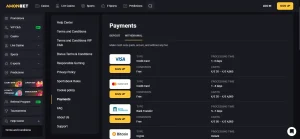
Fast Payouts and Real Money Withdrawal Limits at Amonbet Casino UK
Payout limits and timing for UK readers Amonbet's current terms set a baseline withdrawal limit...
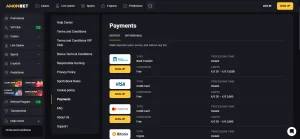
Instant GBP Deposit Options and Cashier Limits at Amonbet Casino UK
GBP funding details for UK readers Amonbet's general terms set the minimum deposit at £20...

£1 Minimum Deposit Casinos in the UK: What to Check
A £1 minimum applies to the cashier and payment method, while promotions and withdrawal terms...

£10 Minimum Deposit Casinos in the UK: Terms
The cashier threshold governs a single transaction; it does not determine wagering, play time or...

£2 Minimum Deposit Casino UK: What It Means
A small entry deposit funds real-money play, but promotions, game costs and withdrawal rules are...

£20 Minimum Deposit Casinos in the UK: What to Know
UK casino cashier minimums vary by operator and payment route, so a £20 threshold is...

£3 Minimum Deposit Casinos in the UK: What to Check
A £3 entry threshold is separate from bonuses, balance duration and withdrawals, and the cashier...

£4 Minimum Deposit Casinos in the UK: What to Check
Cashier minimums can vary by payment method, while bonus terms and a small balance affect...

£5 Minimum Deposit Casinos in the UK: How It Works
Minimums can differ by operator and payment route, so a £5 entry point does not...

Anonymous Crypto Casinos in the UK: What to Know
A guide to Bitcoin payments, no-KYC claims, wagering terms and the practical risks of offshore...

Instant Withdrawal Casinos UK: How Payouts Work
Withdrawal timing depends on the casino’s process, the chosen payment route, bonus conditions and any...

BNB Casino Comparison UK: What Can Be Verified
It distinguishes evidence of BNB acceptance from broader cryptocurrency claims and outlines what a UK-focused...

Bitcoin Cash Casino Comparison for UK Players
A practical look at Bitcoin Cash payments, casino checks and how protections may differ between...

Cardano ADA Casinos in the UK: Comparison Guide
The comparison separates sites reachable from Britain from operators licensed to offer gambling to customers...

Casino Not on GamStop: Instant Withdrawal Guide
Withdrawal timing depends on when processing begins, the payment method, verification and any wagering still...

UK Casino Credit Card Payments: What Is Allowed
The UK ban rules out credit-card gambling deposits at licensed sites, even when debit cards...

Casino Sites That Accept Debit Cards in the UK
Visa and Mastercard may be listed, but acceptance depends on the casino’s current UK cashier...

Casino Sites That Accept EcoPayz in the UK: What to Check
A practical guide to cashier options, account compatibility, withdrawals, payment costs and deposit limits at...

Casino sites accepting Jeton in the UK: checks
Jeton availability varies by operator, so checking the cashier and payment conditions is essential before...

Casino Sites That Accept Skrill in the UK
Skrill acceptance can vary by account and payment route, so check the cashier, currency and...

Casinos That Accept Apple Pay in the UK
Apple Pay availability, bonus rules and a separate withdrawal method are distinct checks when assessing...

Casinos That Accept AstroPay in the UK: Cashier Checks
AstroPay listings are not guarantees: availability depends on the signed-in cashier and whether the route...

Casinos That Accept Bank Cheques in the UK
Boku is a pay-by-mobile service, while bank cheques are separate; verify the casino’s named methods...

Casinos That Accept Bank Transfers in the UK
Bank transfers use a bank account, while Boku charges deposits to a mobile phone bill...

Casinos That Accept Bitcoin in the UK: How to Compare
A practical framework for checking Bitcoin deposits and withdrawals, bonus conditions, account requirements and the...

Casinos That Accept Boku in the UK: Deposit Guide
Boku can fund a casino deposit where offered, but winnings need a separate supported withdrawal...

Casinos That Accept CashToCode in the UK
Payment availability can differ by account and transaction type, while bonus eligibility and withdrawals follow...

UK casinos that accept Citadel: what to check
Payment availability can vary by operator, so the cashier—not a general card listing—determines whether Citadel...

Casinos That Accept Click2Pay in the UK
A Click2Pay deposit may reach a casino balance without qualifying for a bonus, so payment...

Casinos That Accept ClickandBuy in the UK: What to Check
A payment method is confirmed only when it appears in the operator’s own cashier where...

UK Casinos That Accept Debit Cards: Deposits & Payouts
Understand how card funding differs from withdrawals, and what to check before choosing a debit...

Diners Club Casinos in the UK: What to Check
Diners Club availability is separate from slot rules, so payment options, account controls and game...

Casinos that accept Dogecoin in the UK: deposits
Dogecoin availability, bonus eligibility and withdrawal routes can differ, so each part of a casino’s...

Casinos That Accept E-Wallets in the UK
E-wallets sit alongside cards and bank-based options, with availability and transaction conditions varying by casino...

Casinos That Accept E-Checks in the UK: What to Check
E-check availability can vary by account, location and enabled options, while deposit and withdrawal routes...

Entropay at UK Casinos: How to Check Availability
Entropay availability can vary, so compare casino payment options, costs, limits, currencies and withdrawal conditions...

Casinos That Accept Ethereum in the UK: What to Check
Ethereum availability can vary by account, location and transaction, so payment labels need checking in...

Casinos that accept Giropay in the UK: payment checks
Giropay availability, bonus eligibility and withdrawal rules can differ, so the cashier and offer terms...

Casinos That Accept Google Pay in the UK: What to Check
Availability in the cashier confirms deposit access, while offers and withdrawals require separate checks. Check...

Casinos That Accept iDEAL in the UK: Payment Guide
Payment eligibility, bonus exclusions, deposit limits and withdrawal routing can all affect an iDEAL-funded casino...

Casinos That Accept Instadebit in the UK: What to Check
Availability can depend on the account, while currency, source matching, verification and timing shape the...

Casinos that accept Interac in the UK: what to check
A payment logo alone does not confirm access; availability depends on the cashier, account eligibility...

Klarna at UK casinos: deposits, bonuses and checks
A cashier option may show a route is available, but bonus terms determine whether a...

Casinos That Accept Litecoin in the UK: What to Check
Check for Litecoin or LTC in the cashier, then compare payment routes, withdrawal conditions and...

Casinos That Accept Maestro in the UK: Payment Guide
Maestro availability can vary by casino, account and card issuer, while deposit support does not...

UK Casinos That Accept Mastercard: Deposits and Slots
A Mastercard logo concerns funding an account, while game availability and offer terms are governed...

MiFinity at UK Casinos: How to Check Availability
MiFinity availability can depend on the methods shown in an account’s cashier, so general payment-page...

Casinos That Accept Monzo in the UK
Monzo card or bank payments and Boku phone billing are separate routes, so casino payment...

Casinos That Accept MuchBetter in the UK
MuchBetter availability can vary by account and transaction, so the cashier is the practical check...

Casinos That Accept Neosurf in the UK: Payment Rules
Cashier availability, bonus eligibility and withdrawal options are separate issues, so verify each one before...

Casinos That Accept Neteller in the UK: What to Check
Neteller availability can vary by operator and transaction, so payment listings should be checked against...

UK Casinos That Accept Pay by Phone: Boku Guide
Boku charges deposits to a mobile bill or PAYG credit, but it is not an...

Casinos That Accept PayPal in the UK: What to Check
PayPal availability, bonus eligibility and casino withdrawals are separate questions, so each needs checking before...

Casinos That Accept POLi in the UK: What to Check
A listed deposit route does not guarantee bonus eligibility, so cashier availability and each promotion’s...

Casinos That Accept Revolut in the UK: Payments
A casino may accept a Revolut payment while excluding it from a promotion, so payment...

Casinos That Accept Ripple XRP in the UK
Casino payment pages and cashiers can clarify whether XRP is supported and what to check...

Casinos That Accept Siru Mobile in the UK
Siru Mobile is one Pay by Phone service, and a casino that accepts another mobile...

Casinos That Accept Solana in the UK: What to Check
A casino account, a Solana deposit option and a bonus are separate claims that need...

Casinos That Accept Tether in the UK: Payment Guide
Compare cashier availability, network compatibility, withdrawal checks and payment conditions when assessing Tether casino payments....

Casinos That Accept Ukash in the UK: What to Check
Verify Ukash by name in the casino cashier, since a prepaid deposit option does not...

Casinos That Accept UpayCard in the UK
UpayCard acceptance and slot bonus eligibility are separate checks, so the promotion terms matter as...

Casinos That Accept USDC in the UK: Payment Guide
USDC availability depends on the operator and the options shown for a UK account, so...

Casinos That Accept Visa in the UK: Payment Guide
Visa debit acceptance varies by casino, while bonus eligibility, withdrawal routes and payment costs depend...

Casinos That Accept WebMoney in the UK
A selectable cashier option is stronger evidence than a logo, and the withdrawal route needs...

Casinos That Accept Wire Transfers in the UK
Bank-based casino payments can use conventional transfers or open banking, with different authorisation and account-matching...

Casinos That Accept Wirecard in the UK: Payment Checks
A Wirecard listing may indicate a deposit route, but withdrawals, promotion terms and game availability...

Casinos That Accept Zimpler in the UK: Payment Checks
Zimpler availability, deposit use and withdrawals depend on the casino’s stated terms and the options...

Fast Withdrawal Casinos in the UK: How Payouts Work
Casino processing time is only one part of a withdrawal; payment routes, verification and account...

Instant Bank Transfer Casinos in the UK: Checks
Bank transfers are one possible casino funding route, and the cashier confirms which methods are...

iPad Casinos UK: Payments, Games and Account Checks
A practical guide to account settings, payment conditions, games, apps and real-money play on an...

Mobile Top-Up Casino UK: Phone-Bill Deposits
Mobile-funded deposits use a phone number and its billing arrangement, rather than a debit or...

No-Minimum-Deposit Casinos in the UK
A low cashier threshold does not determine which payment methods are eligible for gambling deposits...

Online Casinos That Accept SMS Deposits: How It Works
Boku deposits use a mobile number and a texted verification code, with availability determined by...

Pay by Mobile Casinos UK: Deposits and Terms
See how phone-bill and SMS deposits compare, what to check before paying, and how deposit...

Pay by Phone Bill at UK Casinos: Payforit Guide
Follow the cashier steps, confirm the mobile number and see how phone-bill funding compares with...

Pay-by-Phone Casinos UK: Deposits and Terms
See how a phone-bill deposit moves from the casino cashier to your balance, and what...

Payforit Mobile Casinos UK: How Deposits Work
Payforit availability varies by casino, and deposits use an SMS confirmation step rather than card...

Quick Withdrawal Casinos in the UK: What to Expect
A practical look at how casino processing, payment routes and bonus wagering affect when winnings...

Same-Day Payout Casinos in the UK: What to Check
Payout speed depends on the payment route, approval process, verification checks, withdrawal limits and any...

Casinos Accepting Direct Banking: Payment Guide
A practical look at how Open Banking payments work, what to check in the cashier,...

TRON TRX Casino Comparison for the UK
The guide explains the UK licensing boundary, what to check before depositing or withdrawing TRX,...

UK Crypto Casinos With No KYC: What to Know
UK-licensed operators cannot accept cryptocurrency, so BCH deposits point to offshore sites with different protections...